Tuesday, June 30, 2015

Why a Kiambu village is known as Zambezi

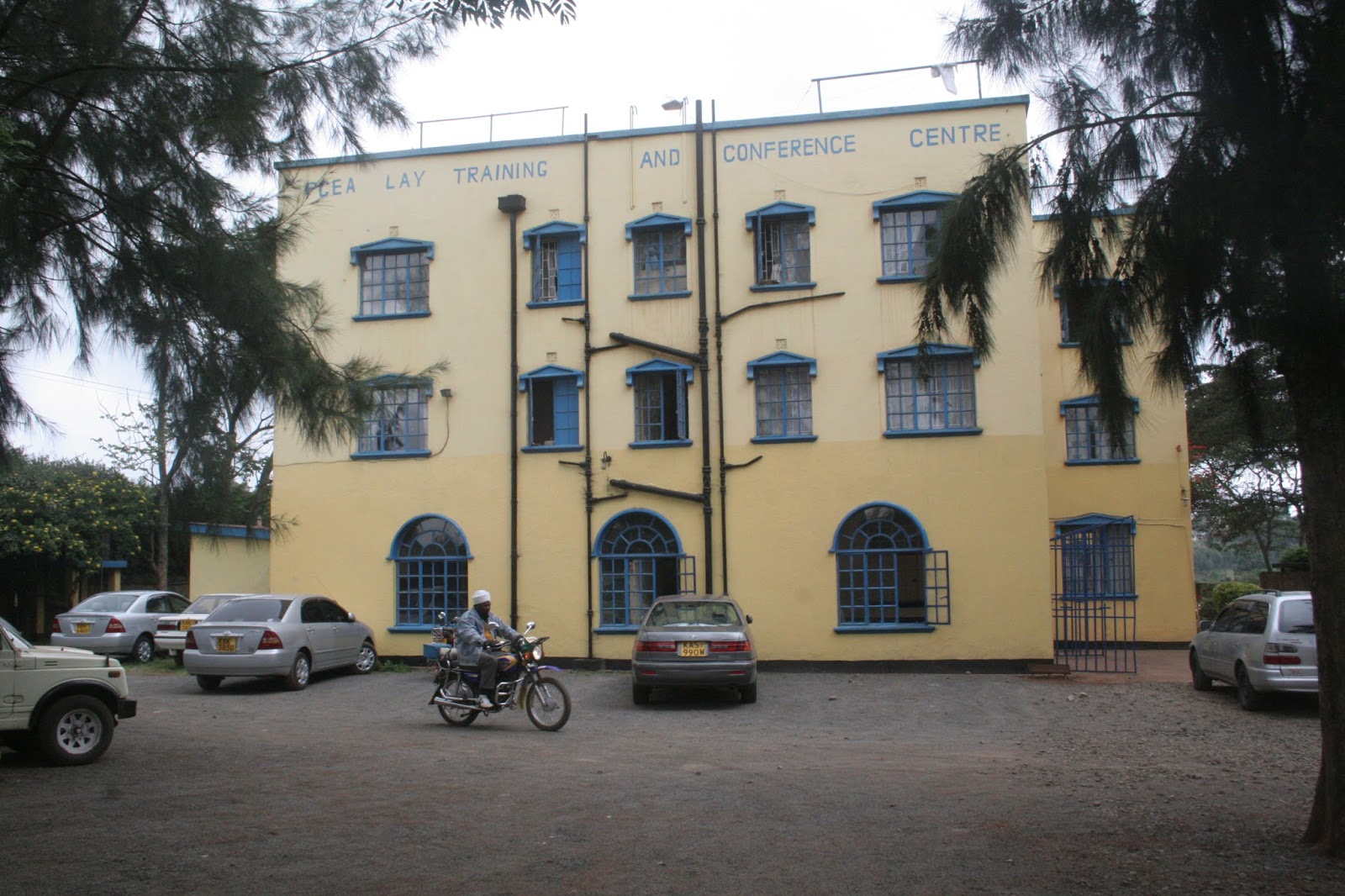
Nothing fascinates me than the PCEA Training Centre in Zambezi Kikuyu. Not that it is an extra-ordinary building but because of the past history. Of course few Kenyans know about this building – and its colonial bunkers- but at least those who have used the Nairobi-Nakuru Road know of Zambezi.

Now for many years this was the Zambezi Motel and it gave name to this village in the outskirts of Nairobi. Before it was re-opened on November 30, 1963 as the new Zambezi Motel, it had been lying desolate after it was abandoned by its previous owner.

That time, according to records, a 24-year Mrs Josephine Aron and her husband Sigi had decided to rehabilitate the building as the “best gesture of our faith in this lovely country”.

Josephine’s husband, was a land and real estate agent. Having worked in both Rhodesia and Zambia, he had fallen in love with the Zambezi River and wanted to immortalize his love by naming the 65-bedroom business, Zambezi Motel. It was actually the only motel, worth its name in Kenya. They also named their two cats, Zam and Bezi.

Designed to be a stop-over for motorists, it was expensively furnished, and had a site for caravans. A single would cost Sh 25 while a double was Sh45 by 1963. And by 1969 this had climbed to Sh45 for single ands Sh 80 for double. Zambezi was actually a luxurious stop over but before it was renovated it was simply Njogu-Inn. Owned by Mrs Berkley Mathews, Njogu-Inn was perhaps the best known hotel on the Nairobi-Nakuru Road. Her Husband E.J.H Mathew used to own the Kikuyu Estates – a huge swath of land which was later sold to James Gichuru, the pioneer minister for finance.

Mathews was one of the settlers who did not want to sample life under an African government and in 1963 shortly before independence she had offered it for sale for £32,000 – the entire building and its contents. But there were few takers for this. As more property was thrown into the market and with the fear of an African-led government reaching crescendo, the value plummeted to £6,000 and that is when it was purchased.

In one of her last interviews with a Kenyan paper, Mrs Mathews remarked: “We are sorry of course, but it is one of those things. We have already got rid of everything else…”

Njogu-Inn had been completed in 1953 just as the Mau Mau war broke. It was a bad investment; a bad bet. The owners had started constructing it in 1947 – the year that Jomo Kenyatta took over leadership of Kenya African union and started agitating for change. But few foreign investors thought that the “white man’s country” – as they called Kenya – would end up with an African government. Certainly not the Njogu-inn proprietor. But to safeguard her clients she build some bunkers underneath the building that were furnished too. Here, nobody would reach the clients – and even today, few at this church building know of these dark corners.


I recently came across an old review of Zambezi and the owner was grumbling that because it was far from the City, it was putting people off. Although she at one point dropped the cost of a double from Shs 80 to Sh 35. It failed to make economic sense. As the dollar crisis began in 1970s throwing the tourism industry into a spin. She sold it to PCEA Church as their training centre.

But the name she had abandoned Njogu-Inn for Zambezi had been picked a River Road trader who opened a hotel known as Njogu-Ini. It had the Njogu-Inn logo of an elephant although it means the place of elephants. How a place of worship was a beer hole is the untold story of Zambezi. Njogu-ini, the River Road bar, has survived ever since and Zambezi, the name, is now a village in Kikuyu. History continues…


Thursday, June 25, 2015

All we know about statue outside Kenya's Supreme Court

The statue of a naked boy holding a fish marks the entrance to the Supreme Court of Kenya. It used to be known as Hamilton Fountain. This statue was ordered during the Second World War by Mrs Getrude Hamilton. It was supposed to be placed in Nairobi as a living testimony to what her late husband and lawyer, George Alexander Hamilton who died in 1937 stood for: justice.

However, this is not the original statue that Mrs Hamilton had ordered. The original was packed aboard a cargo ship in England but the ship sank in the Indian Ocean.

Saddened by the loss, Mrs Hamilton ordered a replica which was erected outside the law courts of Nairobi. It never lasted for long as somebody stole it. The Nairobi City Council which had been mandated to take care of the statue commissioned Kenyan sculptor Robert Glan to mold another one.

Glan did it with it faint pictures of the original and whatever lay at the bottom of the ocean. It still stands today.

Tuesday, May 19, 2015

Who will restore these Nairobi symbols of the past?

South Africans have managed to topple the statue of Cecil Rhodes from University of Cape Town and they are moving to vandalise other statues connected to the imperialist past.

In the rage, the statue of Mahatma Gandhi was also vandalised. We don’t know where they will stop.

They are wrong – and we were wrong in 1964 to remove the statue of Lord Delamere from the junction of Kimathi Street and Kenyatta Avenue, the King George V statue and the bronze portrait plaque on the King George VI memorial near Intercontinental Hotel.

Recently, at the Jevanjee Gardens in Nairobi, the statue of Queen Victoria (below) was destroyed by some vandals – denying future Nairobi generations to have a glimpse.

Empty plinths will never tell the story of a nation, however painful. Otherwise, how do we tell the authentic and balanced history of our colonial past while we have distorted the landscape where they sat?

While the fall of any regime is usually followed by the removal of its images and symbols, removal of monuments, memorials and statues is usually the first sign of intolerance. There is no monument that cannot be contested in space and time.

Germany removed the Nazi monument after the Second World War only for it to be rebuilt in 1988 to provide a link between the past and present non-Nazi generation. It is now a reminder of the fascist past and offers a symbolic dialogue to citizens.

In 1964, Kenya erected the statue of Jomo Kenyatta which was unveiled outside Parliament. Some 10 years later, another statue was unveiled outside Kenyatta International Conference Centre.

The two captures the history of Kenya in the formative years and any maverick who would target them in years to come would have done a disservice to history. The same goes to the Tom Mboya and Dedan Kimathi monuments in the central business district.

Perhaps we have been lucky, so far. President Kibaki did well to have resisted pressure to erase the Nyayo symbols and monuments that remind Kenyans about the dark days of Kanu.

Virtually every major town has these symbols – their architectural and aesthetic wants notwithstanding. There was an attempt to deface the Nyayo monument at the Central Park and police were called in and repairs later made. That is how nations should protect their past.

The world watched as Saddam Hussein’s statues in Firdaus Square in downtown Baghdad were brought down by US Marines which was the first attack on symbolic images on a nation’s political and cultural heritage. Is it any wonder that there is an ongoing destruction cultural monuments in Egypt, Iraq, Libya and Syria by Islamic State? They have so far destroyed the statue of Abu Ja’afar Al-Mansour, the founder of Baghdad and the tomb of 12th-century philosopher, Ali Ibn Al-Athir.

When a nation refuses to acknowledge its past and appreciate the aesthetic and historical value of statues and memorials, then it loses an opportunity to dialogue with the past. No nation should settle scores with monuments and South Africans need to learn this.

Having said that, Nairobi should return the statue of Lord Delamere from the shores of Lake Elementeita to its original plinth. We cannot use sites and monuments to settle old scores.

We should start seeing the monuments as part of our heritage, as historical artefacts and as symbols of the past. Or do we think that the French are crazy to have maintained Arc de Triomphe despite the fact that it was associated with Napoleon Bonaparte – a man who almost destroyed France.

For public historians, it was gratifying that President Robert Mugabe said they will keep the grave of Cecil Rhodes in Bulawayo although some ZANU-PF members have been calling for his exhumation and repatriation to Britain. Governor Evans Kidero, should help Nairobi restore its symbols.